
Myopia in babies & toddlers.
While myopia typically starts to develop between the ages of 7 and 13, it can be present and diagnosed in much younger children. This early-onset myopia may be hereditary, meaning that if one or both parents are myopic, there’s a higher chance that the child will be, too.
Let’s take a look at how to recognise myopia in babies & toddlers, what to do if you suspect your child is myopic, and age-appropriate methods of managing the condition.
Symptoms of myopia in babies & toddlers.
Very young children with myopia often don’t know that there is something wrong with their eyesight, or lack the communication skills to explain vision problems to their parents. It’s therefore important to pay close attention to your child in their early years, and watch out for signs of myopia.
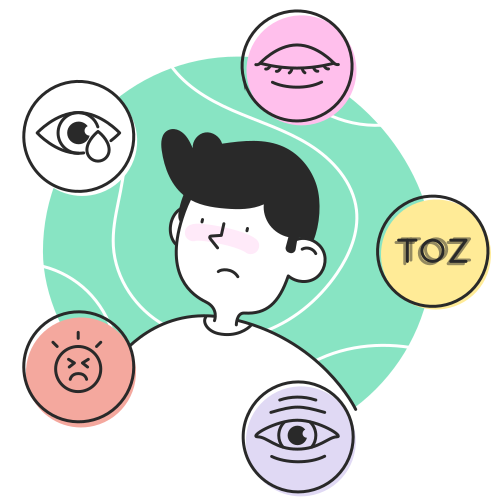
Some of the common symptoms of myopia in babies and toddlers include:
- Holding objects close to their face
- Sitting very close to screens
- Showing little interest in or recognition of objects in the distance
- Squinting or closing one eye to see better
- Frequent eye rubbing
- Excess blinking
- Watery eyes
If you notice any of these symptoms, you should book an appointment with an eye care professional.
Managing myopia in babies & toddlers.
As their eyes are still growing, myopia develops quickly in babies and toddlers, so timely diagnosis and management is important to slow the progression of the condition.
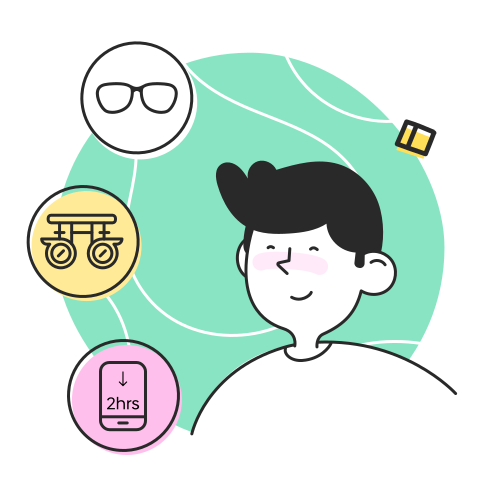
Young children may not be able to explain any problems with their vision, so it’s important to ensure that their eyes are regularly examined by an eye care professional for signs of myopia and other eye health concerns. Limiting screen time and encouraging time outdoors can also help to slow the progression of myopia in young children.
Babies and toddlers with myopia are usually prescribed glasses, as applying and removing contact lenses is often not feasible for young children. While some babies and toddlers with very high prescriptions do wear contact lenses under close parental supervision, contact lens wear is more commonly considered once a child reaches school age. Plastic frames with flexible spring hinges and elastic straps are useful to keep the spectacles in position and prevent damage from clumsy hands.
Age-specific content for babies and toddlers with myopia.
Take a look at the blogs below for further information about myopia in babies and toddlers, or head to our knowledge centre for more insights and support.
Autorefraction: what to expect
Autorefraction is a quick, automated eye test that estimates a person’s prescription. It is commonly used as a starting point for a full eye examination.
All about the 20-20-20 rule for tackling eye strain
People are spending more time on electronic devices than ever before. The 20-20-20 rule is a simple eye exercise to relax the eyes from prolonged screen use.
How do glasses lenses correct vision?
Myopia and astigmatism are common vision conditions in children. Glasses can adjust how light enters the eye, allowing images to focus clearly on the retina. Prescription lenses help focus light accurately inside the eye so that people with myopia, hyperopia, or astigmatism can see clearly.
Axial length measurement: what to know
Axial length is the length of the eye from the front to the back, and is a key measurement of the eye
Eye problems that can affect babies and toddlers
Babies’ eyes are still developing. Learn how to spot common eye problems in babies and when to get them checked.
Eye drops used for babies and toddlers
Eye drops are commonly used in babies and toddlers to check eye health and treat common conditions like infection or irritation.
Sunglasses and sun protection for children's eyes
How to keep your child safe in the sun with simple tips on sunglasses, hats, shade, and healthy outdoor habits.
Inside your eye exam: eye drops for vision testing
Accommodation allows the eye to adjust vision for different distances. Eye drops which relax accommodation can assist in verifying the eye’s prescription.
What is atropine? Parents' guide
Atropine has been used in medicine since the 1800's. For eye care it has gained recent attention for its ability to slow progression of myopia in children.